Trump Claims Iran Could Join Abraham Accords in Major Shift
 May, 27 2026
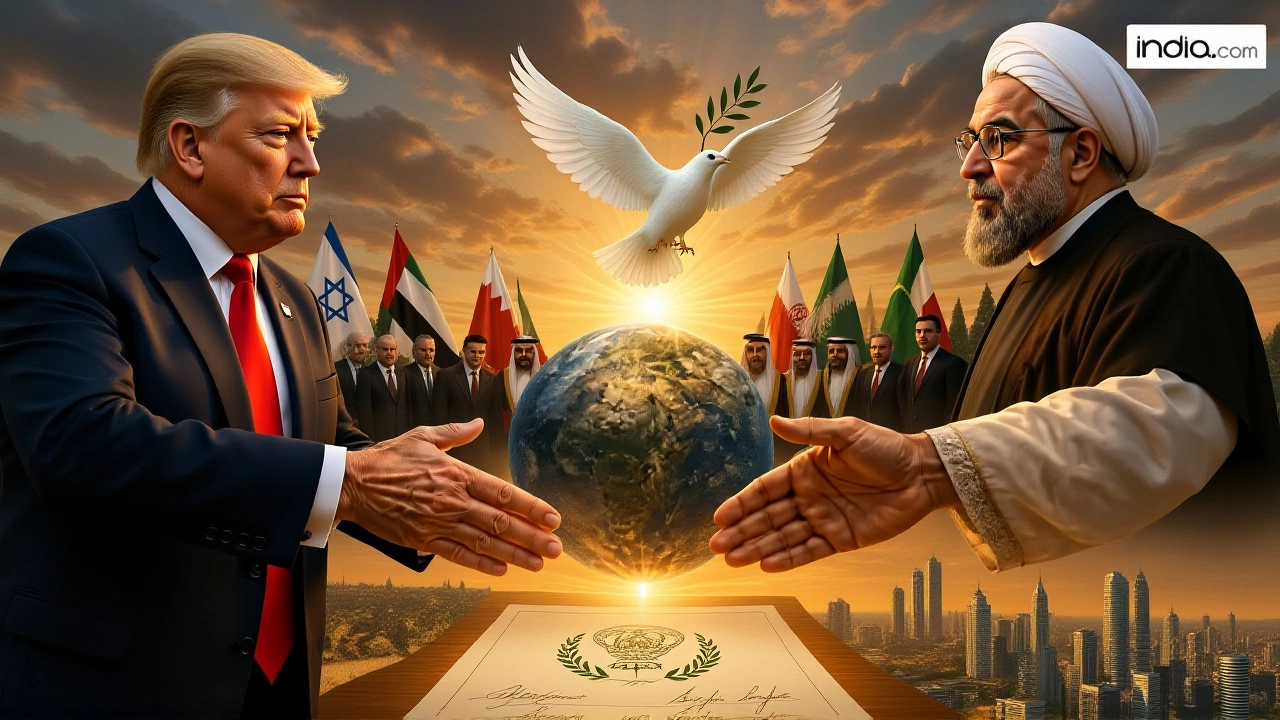
When Donald Trump, President of the United States, recently suggested that Iran could join the Abraham Accords, he threw a wrench into decades of Middle Eastern geopolitical stalemate. The claim, made during ongoing diplomatic talks, hints at a massive shift in how Washington views its relationship with Tehran and Jerusalem.
Here’s the thing: this isn’t just another campaign promise or off-the-cuff remark. It comes amidst active negotiations involving Gulf states and signals a potential end to the current hostilities between the US and Iran. If true, it would rewrite the rules of engagement in West Asia overnight.
The Big Pitch: Expanding the Peace Framework
According to reports from Axios, citing two anonymous US officials, Trump held a conference call on Saturday with leaders from several Muslim-majority nations. The list was impressive: Saudi Arabia, the United Arab Emirates, Qatar, Pakistan, Turkey, Egypt, Jordan, and Bahrain.
The twist is that Trump didn't just talk about general peace. He specifically urged these leaders to normalize relations with Israel and expand the Abraham Accords framework. His primary target? A deal between Saudi Arabia and Israel, which he describes as a "big step" for the region. But the real kicker was his suggestion that once the US-Iran conflict ends, Tehran could also become part of this diplomatic web.
Turns out, Trump sees the Abraham Accords not as a closed book, but as an open invitation. In a social media post, he thanked Middle Eastern countries for their support, stating that the historic agreement would grow stronger with more participants. It’s a bold vision, one that attempts to bridge deep ideological divides through economic and diplomatic incentives.
Iran's Hardline Stance vs. Diplomatic Hope
But wait—why would Iran ever agree to this? Historically, Tehran has been fiercely opposed to any normalization with Israel. Back in November 2021, Iranian Foreign Minister Foad Hussein explicitly confirmed that Iran would not be part of the Abraham Accords. That stance hasn't officially changed.
However, the context has shifted dramatically. Recent tensions have escalated, with Iran rejecting US demands regarding uranium enrichment. Supreme Leader Seyed Ali Khamenei (referred to as 'Mujtaba' in some translated reports, likely a transcription error for Khamenei or referring to a specific advisor) warned against handing over nuclear materials. Meanwhile, the Revolutionary Guard Corps issued stark warnings that any further attacks would trigger a war beyond imagination.
Yet, amidst this rhetoric, there are whispers of backchannel diplomacy. Live Hindustan reports indicate that Trump thanked Gulf states for facilitating talks with Iran, hinting that Tehran might join the accords in the future. This suggests that while public posturing remains hardline, private conversations may be exploring unprecedented compromises.
What Are the Abraham Accords?
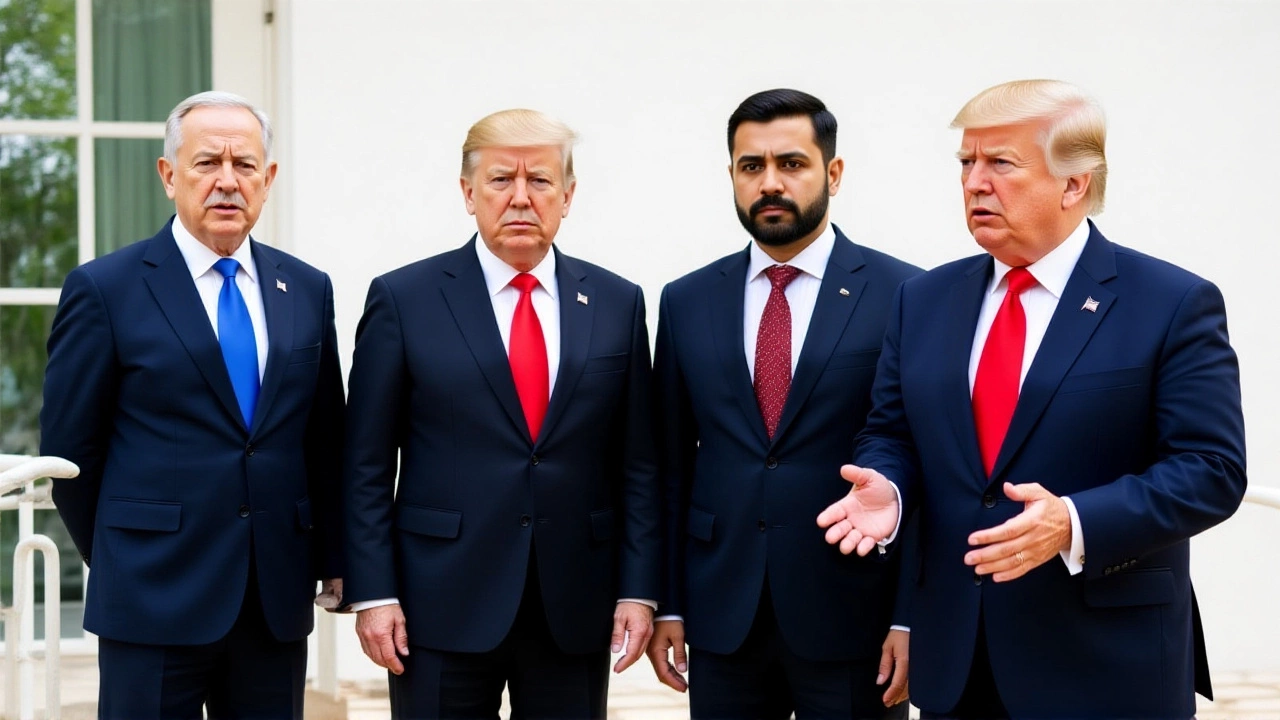
To understand the significance, let’s look at the basics. The Abraham Accords were announced on August 13, 2020, as a joint statement between Israel, the US, and the UAE. Signed formally on September 15, 2020, by Israeli Prime Minister Benjamin Netanyahu, UAE Foreign Minister Abdullah bin Zayed Al Nahyan, and Bahraini Foreign Minister Abullatif bin Rashid Al Zayani, the deals normalized relations between Israel and these two Arab states.
By March 1, 2021, Mohammed Al Khaja arrived in Israel as the UAE’s first ambassador. Since then, the agreements have expanded into trade, tourism, security cooperation, and direct flights. The name itself—chosen to honor the patriarch Abraham revered in Judaism, Christianity, and Islam—was designed to symbolize shared heritage and mutual respect among the three Abrahamic faiths.
The Silence From Key Players
Despite Trump’s enthusiastic outreach, the response from the invited leaders has been notably quiet. None of the countries on that Saturday conference call have publicly commented on the proposal. This silence speaks volumes. For many Arab leaders, normalizing ties with Israel without significant progress on the Palestinian issue remains politically toxic domestically.
Moreover, bringing Iran into the fold presents a monumental challenge. Iran views Israel as an illegitimate state and a regional threat. Asking Tehran to sit at the same table as Riyadh and Jerusalem requires a level of trust that simply doesn’t exist yet. Experts argue that while the idea is ambitious, the practical hurdles are immense.
Why This Matters Now
The timing is critical. With global attention focused on conflicts in Ukraine and Gaza, stability in the Middle East feels increasingly fragile. A successful expansion of the Abraham Accords could unlock billions in economic opportunities, reduce military spending, and create a new era of regional cooperation. Conversely, failure could lead to further fragmentation and proxy wars.
For now, the details remain unclear. Is this a genuine diplomatic breakthrough or a political maneuver? Only time will tell. What is certain is that Trump’s administration is betting big on diplomacy to reshape the Middle East’s future.
Frequently Asked Questions
Who originally signed the Abraham Accords?
The original signatories were Israel, the United Arab Emirates, and Bahrain. The agreements were brokered by the United States under President Donald Trump and officially signed on September 15, 2020, marking the first time Arab nations formally recognized Israel since the Oslo Accords.
Has Iran officially agreed to join the Abraham Accords?
No, Iran has not officially agreed to join. In fact, Iranian officials have previously stated they would not participate. However, recent diplomatic talks facilitated by the US suggest that the possibility is being explored behind closed doors, though no formal commitment has been made.
Which countries were contacted by Trump regarding the expansion?
Trump spoke with leaders from Saudi Arabia, the UAE, Qatar, Pakistan, Turkey, Egypt, Jordan, and Bahrain during a conference call. He urged them to consider normalizing relations with Israel and expanding the existing peace framework.
What is the main goal of expanding the Abraham Accords?
The primary goal is to foster regional stability, enhance economic cooperation, and reduce military tensions in the Middle East. By bringing more countries into the fold, including potentially Iran and Saudi Arabia, the US aims to create a broader network of diplomatic and commercial ties.
Why is Saudi Arabia important in this context?
Saudi Arabia is seen as the key to unlocking wider regional acceptance. As the largest economy and most influential monarchy in the Arab world, a Saudi-Israeli normalization deal would signal a major shift in regional politics and encourage other hesitant nations to follow suit.